

Curso online: Using art as a classroom resource
Conocer, idear, desarrollar... Using art as a classroom resource es un curso, destinado a docentes de Educación Infantil y Primaria, que pretende explorar las posibilidades del arte como vía para la enseñanza del inglés.
Impartido íntegramente en lengua inglesa, el curso está diseñado para ofrecer a los profesores herramientas para la creación de recursos educativos a través del arte. Se pretende, además, que la iniciativa sirva de apoyo a cualquiera de las materias que se imparten en inglés en los niveles de Educación Infantil y Primaria.
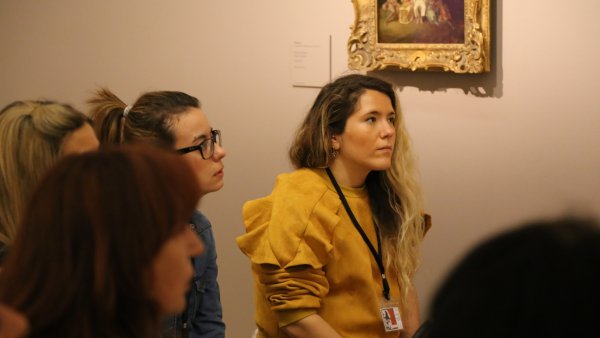
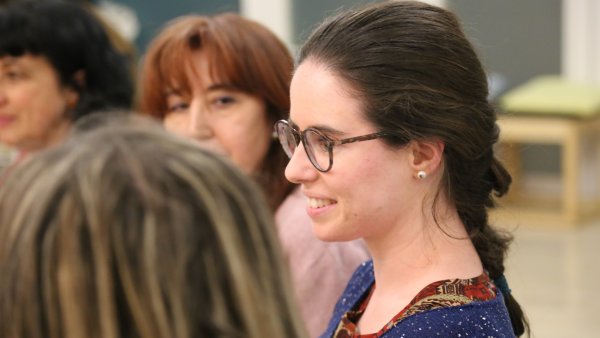
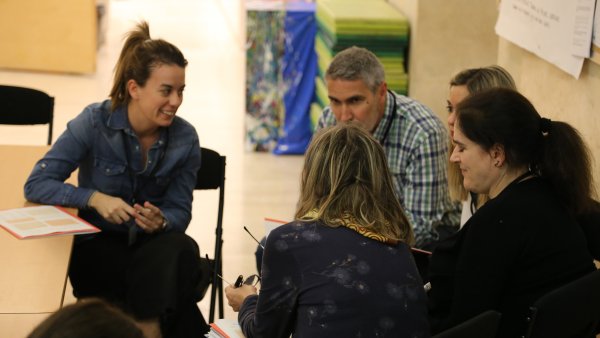
Durante el desarrollo de las distintas sesiones combinamos diferentes metodologías de aprendizaje, clases teóricas y prácticas junto con propuestas de trabajo y de generación de contenido basadas en el intercambio de ideas. Las obras del museo, se convierten de este modo en el nexo común en torno al cual reflexionar y compartir experiencias en relación a la lengua, la cultura inglesa, el patrimonio artístico y los vínculos interculturales.
Observaciones. 1. Actividad dirigida a profesores de la Comunidad de Madrid en activo. 2. Los profesores de centros concertados y privados y los profesores interinos deberán enviar por FAX (91 572 03 20) o por correo certificación actualizada de estar prestando servicios en su centro, antes de finalizar el periodo de inscripción. 3. Es necesario disponer de cuenta de correo electrónico en EducaMadrid a efectos de inscripción y seguimiento de la actividad. 4. Con el fin de compartir y difundir las aplicaciones didácticas más destacadas elaboradas por los asistentes, se recomienda incluir los datos del autor y la licencia "Creative Commons by-sa". 5. Los docentes admitidos en el curso que, sin causa plenamente justificada, no lo inicien o lo abandonen, no podrán participar en ningún otro curso durante los 12 meses siguientes.
¿Qué requisitos existen para la obtención del certificado? 1. Asistencia al total de horas de la fase presencial del curso. 2. Valoración de las actividades de formación según lo establecido en el capítulo II, artículo 5 de la Orden 2883/2008, de 6 de junio, BOCM Núm. 149, por la que se regula la Formación Permanente del Profesorado.
¡Importante! El curso se encuentra dirigido a docentes de Educación Infantil y Primaria que hayan obtenido la habilitación lingüística en idiomas extranjeros (especialidad inglés) y que desempeñen puestos bilingües en centros docentes públicos y concertados de la Comunidad de Madrid. También está destinado a inspectores de Educación e interinos en lista (sin centro).
¡Nota! Todos los inscritos pueden acceder al curso a través del aula virtual de la Comunidad de Madrid.

Hi everyone!
As Ángeles is sharing, our idea is to create a community between bilingüal teachers just as the ones we had with other school teachers.
It's obvious that we have different needs as educators and our students face their contents from a different perspective.
In my view, the teachers, when well connected, can share an enormous amount of resources and discover what works and what doesn't. That's the challenge: to create a place where we can talk and share ideas and activities and put them into practice. Once this is done, we could share some feedback and improve them if needed.
The museum has an interesting role in this community for being a sharing point and for becoming a mediator between teachers that share the same interests. Also, it can be a great help when we are in need of information about the works of art that we can use to work in our lessons. But I believe the museum educators can share also, some wisdom about how to really work with art and language. We are used to work with a new group very day and, thus is doesn't allow us to create the same bonds you make with your students, it gives us the opportunity to check very fast if the resources we are using really work or if we have to change something. I have seen how, as a museum educator, we constantly adapt ourselves to the students and when working as a school teacher, it's easier to get confortable.
When we find this places given by the museum, to explore new points of view, we get again excited and remember why we wanted to be EDUCATORS of all kinds.
Creating connections between the museums with the schools in the community of Madrid.
Schools are extremely important in museums nowadays. In 2017, only at Thyssen-Bornemisza National museum we registered that more than 20.000 scholars and their teachers participated in activities at the museum. But it is not only about numbers.
For this museum the relationship with the school is of a great importance. In the last 25 years we have understood that the presence of the school in the museum is essential to integrate this institution in the social gear. And to promote its role as an institution linked with social development and change.
¿Why the school is so important for the museum? This is a question that museum educators try to answer very often, trying to find new ways to adapt and allocate school´s interests and needs.
But ¿why the museum is important for schools? This is something that should be answered from your position, the teacher´s position. Finding existing and new ways to relate with the museum is one of the propositions of this course. Indeed this is a question we would like to answer with you in many and different ways.
This is the first question you must answer to complete this course.
There is not a right answer, but a way of thinking and taking notes. Hoping that the result of this course will be a compendium of different proposals and ideas that modify the initial approach you had.
On this point, from our perspective, we can point out several things to start with:
From 2012 we also offer visits in English language due to a great demands of these activities. We have design tailored activities for bilingual schools that look for activities that suit the school program.
Taking into account all the work which is done by the museum to cater the students' goals, needs and interests I must say that museums are a very enriching tool to motivate our pupils learning process.
First of all, there is no need to say that any kind of day trip makes students feel a thrill, however museums can play a very important role in the teaching practice. The main reason is because they are part of the history of the city where they live and some students do not even have the chance to get to know it. Therefore, they have a lot to tell children not only about art, but also about the language which is part of the culture by means of teaching new words they are not used anymore or are technical related art. Moreover, religion and philosophy have something to do with the background of every painting. Furthermore, art can teach how important symbols, colours and all kind of details are so they will put this into practice in "Arts" subject.
All in all, everything above is practiced by means of using English language so it is part of the Content and Language Integrated Learning, better known as CLIL method, the main way of teaching in bilingual schools. So students will learn about all these new aspects without being unaware, as a storytelling at the same time they will interact by answering questions and participating so they can improve their speaking skills.
To conclude, it must be said that in education it is not all about curricular contents but the emotional part takes a lot of relevance in this visit by putting oneself in the painter shoes, trying to guess how the people in the paintings would feel and appreciating the value of every work.
Hi Esther,
You have mentioned a word that is key in my vision of learning english through art. That is "storytelling". I personally believe that this is a great tool for everybody who is learning any language. From the museum, we have explored the goods of this activity in many of our tours. In English we have had literary tours such as "Alice in Wonderland" (for families with children), "To be or not to be" (for secondary school students) or "once upon a time" (for primary school students).
In all of these we tried to engage the participants in telling different stories using the paintings as a resource. We could see the painting and try to tell the story behind, we could find some characters for a story in the museum, we could explore the locations for the story and practice descriptions of real or imaginary places, we could expand our imagination trying to find names inspired by the ones the artists gave to their works...etc
The resources are endless.
Even for the youngest students (even from home, I have to say), we always use storytelling because it's a great way for them to learn how to listen, how the words sound in another's mouth. From the other perspective, it's fenomenal to try to tell a story to someone. I strongly reccomend to explore the storytelling tool when connecting art, language and education.
Hi Esther!
Thank you very much for your answer. I find your ideas very interesting:
- The idea that the museum is a place where students can learn in a real environment.
- The idea of offering students the possibility of visiting the museum, a place that they wouldn’t visit in other way.
- Art as a tool to learn about other subjects, such as history, philosophy and languages.
- It is very interesting for us to know about CLIL and investigate new improvement methodologies.
- The emotional part in learning is essential, and a good museum experience makes it easy.
- To tell stories is a good way to develop the listening and speaking strategies specifically.
I take note of all your ideas. Thank you very much.
Ángeles.
¿why the museum is important for schools?
I strongly believe that museums and schools need to build a partnership since they can benefit from each other. Museums provide the excitement about learning in a different space which teachers cannot create in a classroom. Not only is learning focused on academic work but the social and emotional children’s development is also important for our students learning. These skills are developed in museums programs which show students opportunities to make emotional connections with their pieces of art.
Museums allow students to enrich their learning in various fields and gain experiences.
¿Would you like to be part of a community of practice for the improvement, research and innovation in the bilingual education? ¿What is your idea?
I would like to be part of a community of practice for the improvement, research and innovation in the bilingual education because I would like to learn new ways of engaging my students in their learning processes. My idea is to find a link among history events and pieces of art so my students can contextualise what they are studying
Hi Natalia,
Thank you very much for your answer. It is interesting how the emotional part you refer is something that your classmates have mentioned too. From the museum, we have always thought that this is an essential aspect in student learning and that the museum is an optimal place to develop it. If you are interested in a community of teachers and educators, you might to know our program Musaraña.
It is a growing community of teachers in which we organize many events for free. We all together learn artistic methodologies for teaching and share our experiences. Feel free to browse all the resources generated in the web space created specifically for the Musaraña community:
https://www.educathyssen.org/profesores-estudiantes/musarana